


Technical Specifications for Inverters in Power DC Supply Cabinets
The inverter housed within the power DC supply cabinet serves as one of the system's core functional modules.
Its primary role is to convert a DC power source—typically the -48V, +24V, or 220V DC bus voltage provided by
DC power panel—into high-quality AC power (typically 220V AC). This AC output serves as either a backup or
primary power supply for AC loads located within the cabinet or the equipment room (such as monitoring equipment,
lighting, test instruments, and certain maintenance tools).

I. Core Functions and Positioning
Functional Positioning:
Backup AC Source: In scenarios such as communication base stations, substations, and data centers, when the primary
AC utility power is interrupted, the inverter automatically activates. It converts the DC power from the DC panel or battery
bank into AC power, providing temporary power assurance for critical loads that require an AC supply.
Primary AC Source: At certain sites lacking a stable utility grid connection, or those configured solely with a DC power system,
the inverter can serve as the primary power source for specific AC loads.
Power Conversion Hub: It acts as a bridge connecting the DC power system with AC loads, thereby enhancing the
power supply flexibility and overall reliability of the entire power system.
Placement within the Power Cabinet:
Typically, it functions as either an integrated or external module within the DC power system.
Its input draws power from the DC distribution bus, while its output connects to a dedicated AC distribution unit.
II. Key Technical Features
Input Characteristics:
DC Input Voltage: Features a wide input range, commonly including -48VDC, +24VDC, 110VDC, and 220VDC,
ensuring compatibility with standard DC voltage levels found in both communication and power systems.
Input Protection: Equipped with reverse polarity protection, input under-voltage/over-voltage protection,
and input soft-start functionality to prevent inrush currents.
Output Characteristics:
Output Voltage: Standard 220V AC, single-phase. Certain high-power models support three-phase output.
Output Waveform: Pure sine wave output. This is a critical parameter, as it provides precision instruments and
motor-driven equipment with a power supply quality equal to—or even superior to—that of the utility grid,
ensuring excellent compatibility and freedom from harmonic distortion (distinguishing it from square-wave or modified-sine-wave inverters).
Output Frequency: 50Hz ± 0.5%.
Voltage Stability: Typically ≤ ±2%.
Load Regulation: ≤ ±3%. Waveform Distortion: <3%.
Conversion Performance:
Conversion Efficiency: High—typically ≥90%. High efficiency minimizes energy loss and reduces the load on the
DC power system (particularly the battery bank).
Dynamic Response: When the load undergoes a sudden step change (from 0% to 100%), the output voltage recovery time is
brief (typically <20 ms), ensuring the stable operation of sensitive equipment.
Protection and Management Functions:
Output Protection: Overload protection, short-circuit protection, and over-temperature protection.
Intelligent Switching:
Automatic Bypass Function: Certain models feature a static switch; in the event of an inverter fault or overload,
the unit can switch seamlessly—within ≤4 ms—to a backup utility bypass source, ensuring zero-interruption power supply.
Utility-Priority Mode: Under normal conditions, power is supplied directly from the utility grid; upon a utility outage,
the system automatically switches to inverter-supplied power, reverting to utility power once restored. The switching time is extremely brief.
Monitoring and Communication: Supports LCD/LED status displays and provides communication interfaces such as dry contacts and
RS485/RS232. It can transmit operational status data and alarm information (e.g., overload, over-temperature, input anomalies) to
power and environmental monitoring system.
Structure and Environmental Adaptability:
Modular Design: Typically utilizes a standard 19-inch modular form factor, facilitating easy installation within power cabinets
and supporting hot-swappable maintenance.
High Reliability: Features industrial-grade components and an enhanced thermal management design.
Operating Temperature: Offers a wide operating temperature range—for example, -10°C to +50°C.
III. Application Value
Enhanced Power Supply Reliability: Provides a seamless power backup solution for scenarios involving mixed loads
(where both AC and DC power coexist), mitigating the risk of equipment downtime caused by AC power interruptions.
Simplified Power Architecture: Integrates inverter functionality directly into the DC power system, eliminating the need to deploy a separate,
standalone UPS unit, thereby saving both space and cost.
Safeguarding Core Operations: Ensures that critical AC-powered support systems—such as monitoring, security, and environmental control
systems—remain fully operational during external AC power outages, thereby safeguarding the integrity and safety of primary equipment.
Improved O&M Convenience: Provides standard AC power interfaces for use with on-site maintenance tools, temporary lighting, and other
auxiliary equipment. IV. Examples of Typical Technical Parameters
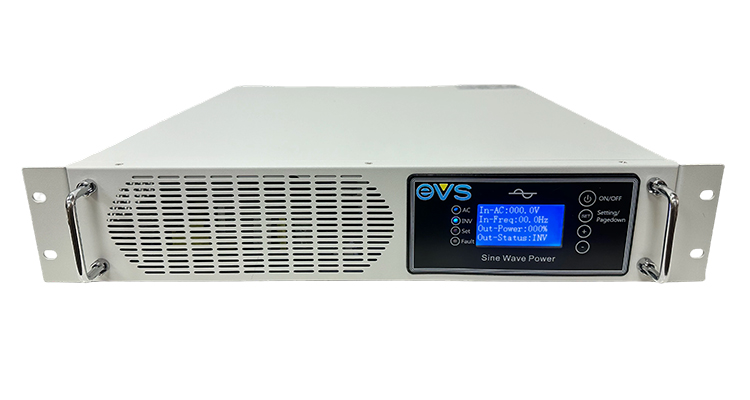
Parameter Specifications
Rated Capacity
1kVA, 2kVA, 3kVA, 5kVA, 10kva etc.
DC Input:
Rated Voltage: -48VDC (Range: 40–60VDC)
AC Output:
Rated Voltage: 220VAC ± 2%
Frequency: 50Hz ± 0.5%
Waveform: Pure Sine Wave (THD < 3%)
Conversion Efficiency:≥ 92% (at rated load)
Overload Capability:125% load for 10 minutes; 150% load for 1 minute
Switching Time:Mains ↔ Inverter: ≤ 5ms
Protection Functions:Input Over/Under-voltage; Output Overload/Short Circuit; Over-temperature Protection
Communication Interface:RS485 / Dry Contacts
Summary
The telecom power inverter within a DC power supply cabinet serves as an intelligent, highly reliable hub for power conversion. It seamlessly integrates the inherent high reliability of
DC systems with the universal applicability of AC power supply. By delivering high-quality pure sine wave AC output and offering seamless switching capabilities,
it effectively resolves the challenges associated with backup power in hybrid power supply environments, standing as a critical component for enhancing the
completeness and resilience of comprehensive power solutions.